러시아 정부는 노동력 확보를 위해 먼 나라들에서 이주 노동자를 모집하고 있다.
By: Geopolitical Futures
1. 러시아 경제를 압박하는 노동력 부족
러시아 정부는 국내 경제 활성화, 수출 유지, 군수 산업 공급을 위해 생산력을 높여야 하지만,
심각한 노동력 부족으로 인해 이를 실현하는 데 어려움을 겪고 있다.
러시아는 현재 인구 감소, 두뇌 유출(Brain Drain), 군 병력 수요 증가 등으로 인해
방위 산업과 **수입 대체 산업(import-substituting industries)**의 노동력 부족 문제가 심화되고 있다.
특히 중앙아시아에서의 이주 노동자 유입이 감소하면서 문제가 더욱 악화되고 있다.
이는 러시아의 강화된 이민 정책 때문으로, 숙련 노동자의 부족이 역대 최고 수준에 도달했다.
특히 건설업은 전통적으로 이주 노동자에 의존해 왔기 때문에 가장 큰 타격을 받고 있다.
러시아 중앙은행은 경제 둔화 및 긴축 통화정책이 노동력 부족을 일부 완화했다고 발표했지만,
정부는 단기간 내 노동 시장이 안정될 것으로 기대하지 않는다.
2. 새로운 노동력 공급처: 아프리카, 남미, 남아시아
서방 제재로 인해 어려움을 겪는 러시아는 비전통적인 국가들에서 숙련 노동자를 유치하고 있다.
예를 들어:
- 프리모르스키 크라이(Primorsky Krai) 및 아무르주(Amur Oblast): 미얀마에서 숙련 노동자 모집
- 타타르스탄(Tatarstan): 동남아에서 숙련 노동자 유치 계획
- 바시키르 공화국(Bashkortostan): 태국, 베트남, 방글라데시 등 동남아에서 봉제 산업 전문가 채용 승인
- 케냐(Kenya): 러시아로 1만 명의 노동자를 파견하기로 합의
이처럼 러시아는 전통적인 중앙아시아 이주 노동자 대신, 아프리카·남미·남아시아 국가들과 협력을 확대하며
노동력 부족 문제를 해결하려 하고 있다.
Russia’s Severe Labor Crunch
Authorities have turned to distant countries to supply migrant workers.
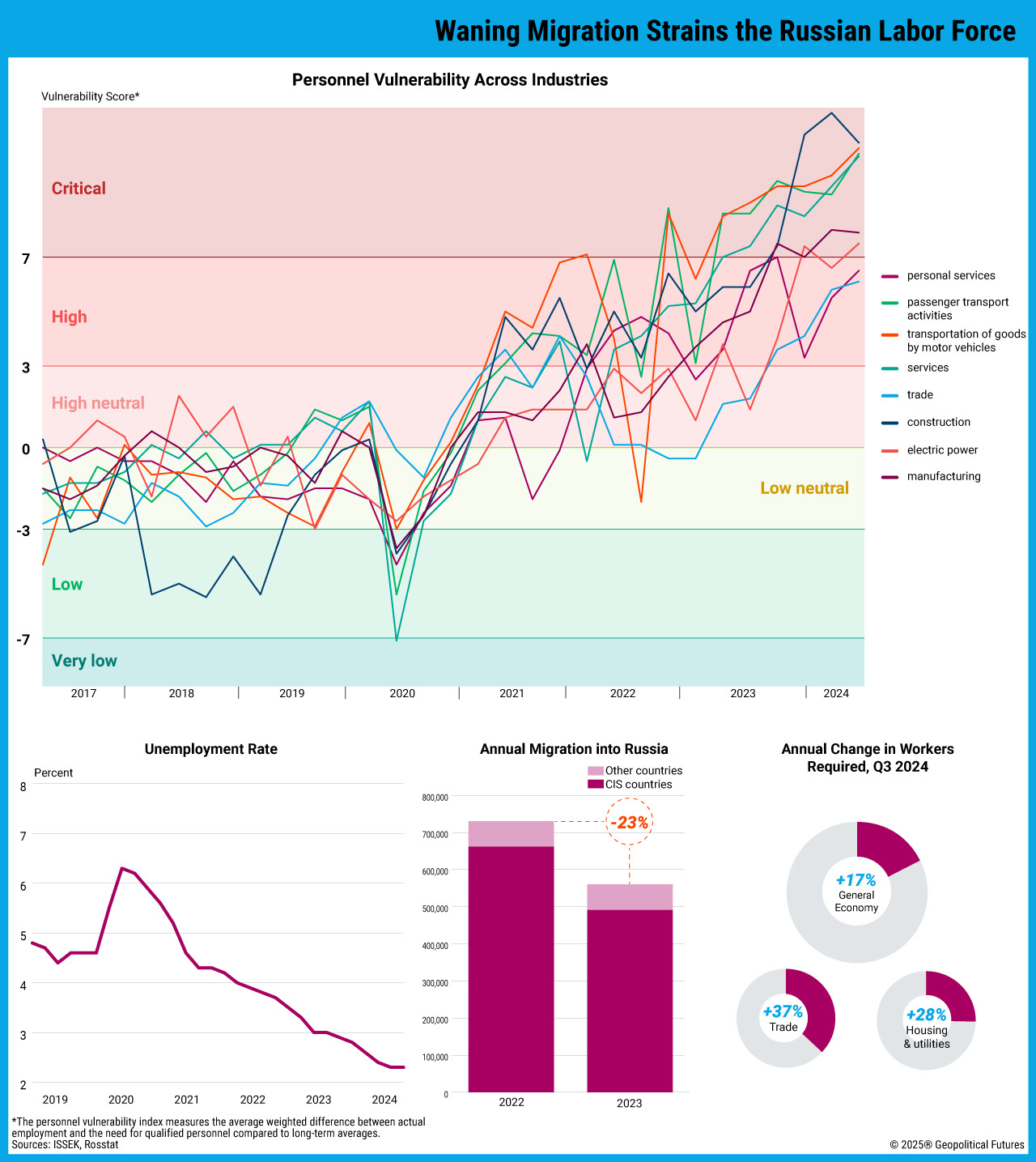

The Kremlin needs higher production to meet the needs of the domestic economy, sustain exports and supply the military, but a severe labor shortage is holding it back. Russia faces persistent brain drain, a declining population, and rising demand for soldiers as well as workers in defense and import-substituting industries. The problem has deepened as migration from Central Asia declines due to tighter immigration policies. Skilled worker shortages have reached record levels, with the construction sector – traditionally reliant on migrants – experiencing the greatest strain. Although the central bank reports that an economic slowdown and tight monetary policy have alleviated some of the labor squeeze, authorities do not expect a rapid stabilization.
To sustain growth under sanctions, Russia has turned to nontraditional sources for skilled migrants – namely Africa, Latin America and South Asia. For example, Primorsky Krai and Amur oblast have recruited skilled workers from Myanmar, and Tatarstan hopes to do the same. Bashkortostan’s sewing industry has been approved to hire specialists from Southeast Asia, including Thailand, Vietnam and Bangladesh. Meanwhile, Kenya has agreed to send 10,000 workers to Russia.
'세계정세메모' 카테고리의 다른 글
| 우크라이나 전쟁 종식을 위한 전략적 접근 (2) | 2025.03.19 |
|---|---|
| 데일리 메모: 가자지구에서의 재개된 전투, 트럼프-푸틴 회담에 대한 추측 (1) | 2025.03.19 |
| 베트남의 중견국 도약 전략 (1) | 2025.03.18 |
| GPF DailyMemo: 트럼프와 푸틴 회담 예정, 미·이란 후티 문제로 공방 (1) | 2025.03.18 |
| 유럽, 방위 전략의 중대한 기로에 서다 (3) | 2025.03.17 |